A leadership journey built on identity, capability, and community.
Participant feedback shows a highly practical and transformative learning experience—one that strengthened leadership identity, developed immediately usable tools, and created a meaningful professional network across the nonprofit sector.
Three outcomes reinforced one another throughout the program.
The program’s impact was strongest where self-understanding, practical leadership behavior, and peer learning came together.
Identity
Participants developed clearer language for their values, purpose, personal leadership brand, and leadership story.
Capability
Coaching, feedback, difficult conversations, influence, collaboration, and systems tools were practiced—not simply discussed.
Community
The cohort became part of the value proposition, creating trust, shared reflection, professional connection, and an enduring network.
Exceptionally strong advocacy and consistently positive outcomes.
Nineteen valid final responses produced a recommendation profile with no Detractors and strong scores across every reported program outcome.
Net Promoter Score
Program outcome scores
Data note: the recorded 8.37 score for Team Leadership Processes includes one zero entry that may have been a non-rating or input error. The official figure is shown as recorded.
Each day advanced a distinct part of the leadership journey.
The progression moved from self-awareness and leadership identity, through practical relational skills, into systems leadership, and finally toward storytelling, integration, and future action.
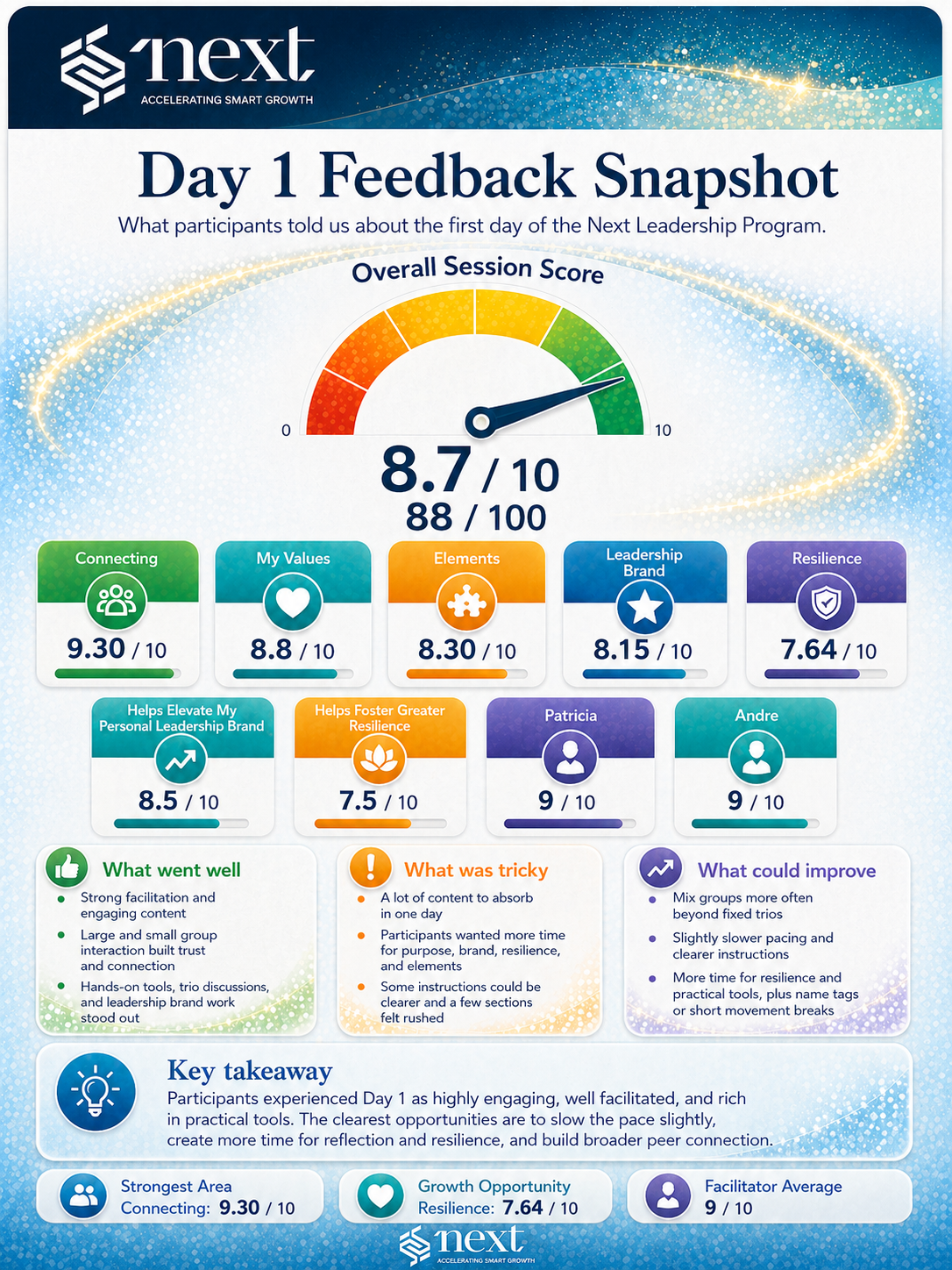
Connection, values, and leadership identity
Day 1 established the relational and reflective foundation of the program. Participants valued the energy, facilitation, practical tools, values work, and early development of a personal leadership brand.
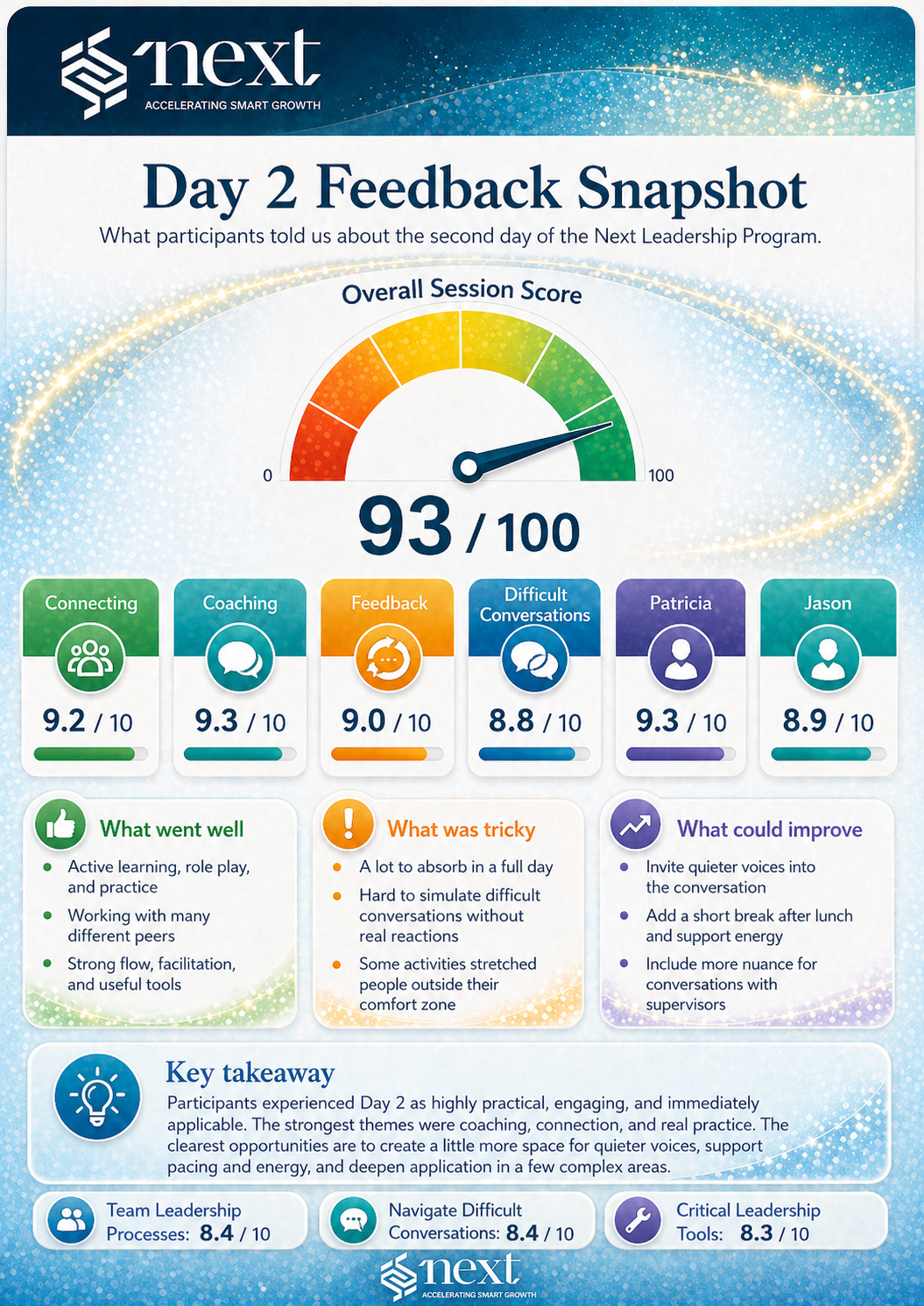
Coaching, feedback, and difficult conversations
Day 2 was the most immediately practical session. Participants valued live modeling, role play, peer practice, and concrete frameworks they could carry directly into leadership conversations.
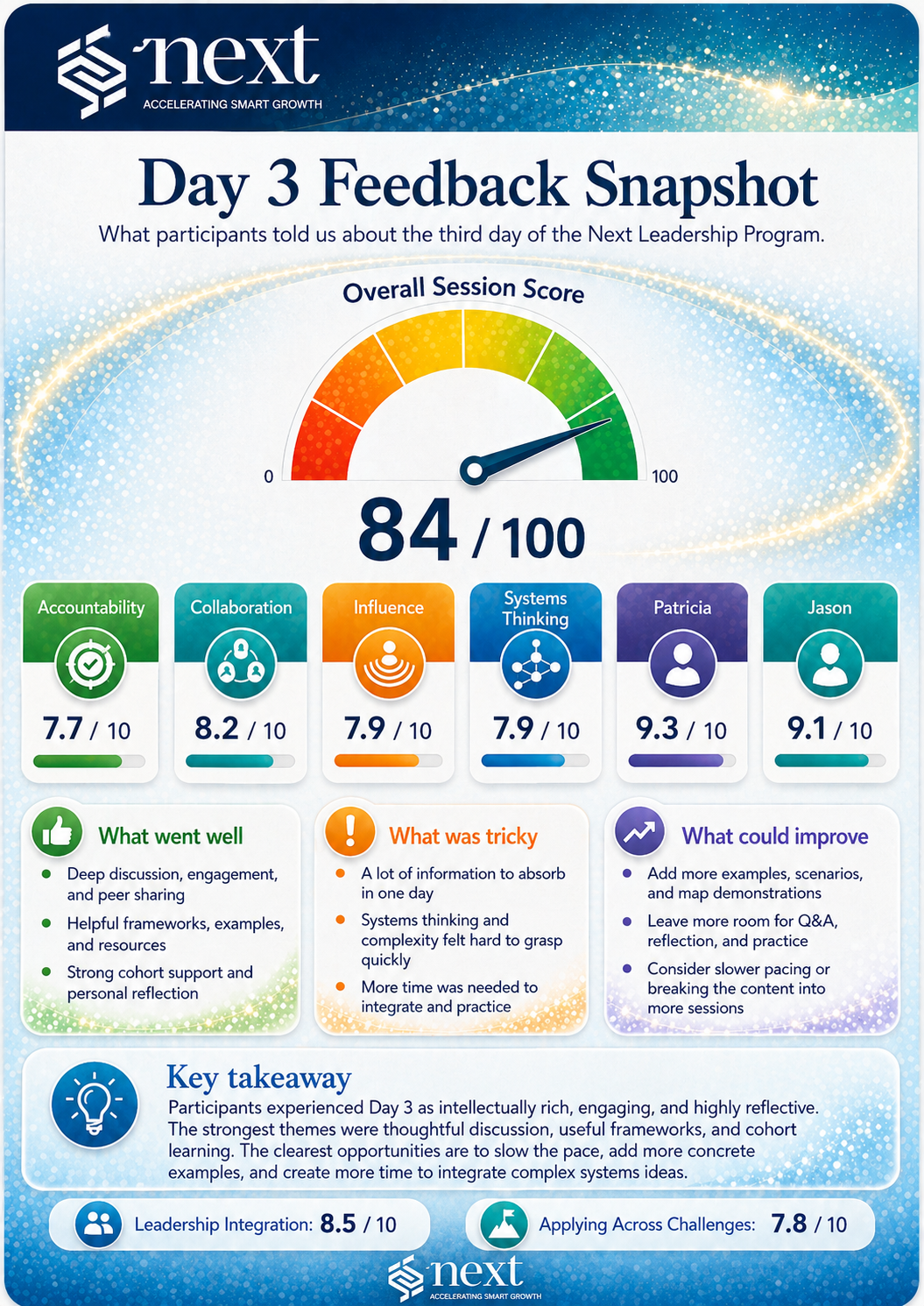
Accountability, influence, collaboration, and systems leadership
Day 3 broadened the focus from individual leadership practice to organizational and systems thinking. Participants valued the intellectual depth and frameworks, while also identifying this as the most cognitively demanding day.
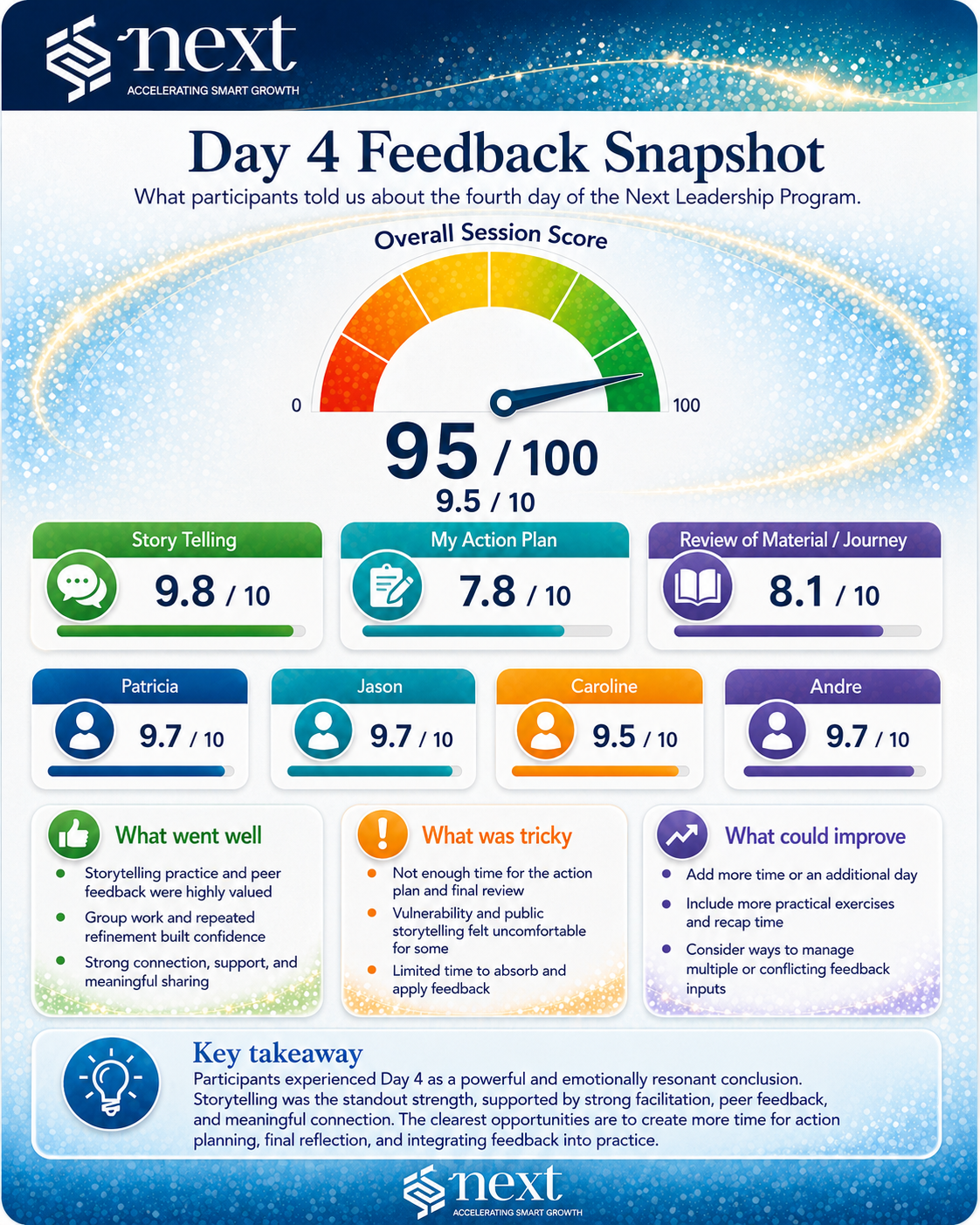
Leadership storytelling, courage, and integration
Day 4 was an emotionally resonant conclusion. Storytelling brought together leadership identity, communication, vulnerability, feedback, trust, and cohort connection.
The strongest design choices—and the clearest opportunities.
What participants valued most
- ✓Practical application. Participants repeatedly valued tools, role play, examples, worksheets, coaching, feedback, and opportunities to practice.
- ✓Facilitator credibility. The facilitators combined warmth, clarity, energy, expertise, and vulnerability.
- ✓Cohort connection. Peer exchange, rotating partners, table work, and storytelling built trust and a meaningful professional network.
- ✓Personal transformation. Values, purpose, leadership brand, reflection, and story helped participants understand and communicate who they are as leaders.
- ✓Spaced learning. Time between sessions supported absorption, practice, and retention.
What participants wanted more of
- →More time for depth. The recurring message was not “less value,” but more room to process, discuss, practice, and integrate.
- →Stronger implementation support. Action planning, follow-up, peer accountability, and post-program reinforcement would help sustain the learning.
- →More contextualized scenarios. Participants wanted examples for different organization sizes, board relationships, managing upwards, and varied power dynamics.
- →More scaffolding for complexity. Systems thinking and advanced leadership topics need worked examples and clearer instructional sequencing.
- →Ongoing resilience support. Resilience should be revisited across the program rather than treated as a single isolated topic.
How to preserve the program’s strengths while increasing long-term impact.
Add a fifth day or formal follow-up
Use the added time for integration, action planning, review, and implementation—not simply more content.
Strengthen action planning
Provide examples, distinguish personal from organizational commitments, and help each participant leave with a small number of realistic priorities.
Introduce post-program accountability
Use peer partnerships, coaching circles, check-ins, or practice assignments to support consistent application.
Differentiate leadership scenarios
Include small, medium, and large nonprofit contexts, plus team, executive, board-facing, and cross-sector situations.
Expand managing-up and board content
Build on influence, accountability, feedback, and difficult conversations through realistic governance and authority scenarios.
Protect the cohort network
Create an alumni structure or peer community so that relationships, stories, and commitments continue after the formal program.
Download and explore the Next Leadership Blueprint.
The blueprint provides a printable companion resource for reflection, planning, and translating the program’s learning into future leadership practice.
Next Leadership Blueprint
Review the blueprint directly below, or download the PDF for offline reading and sharing.
Final feedback infographics.
The bottom section now focuses on the two final program-level visuals: overall feedback and NPS.
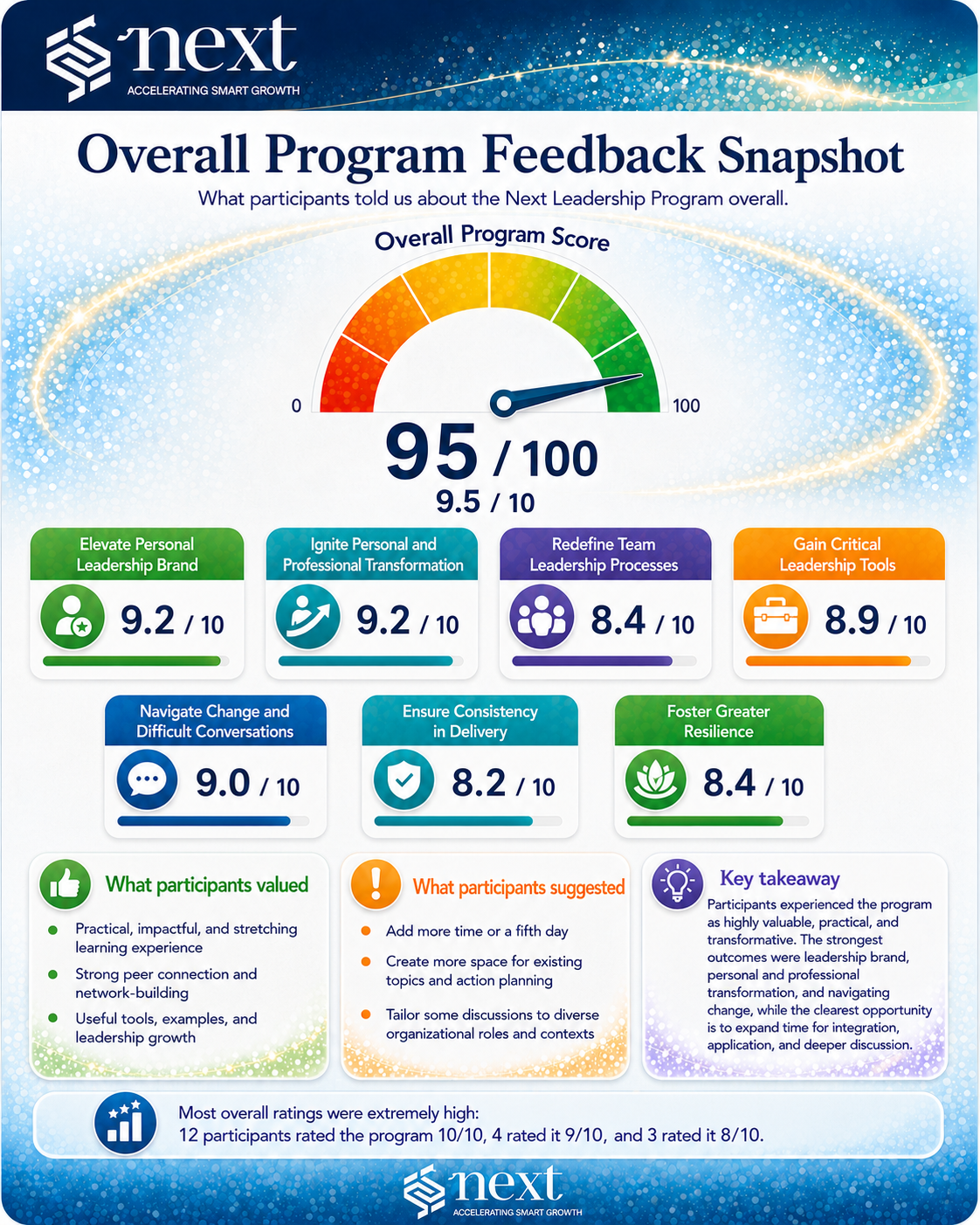
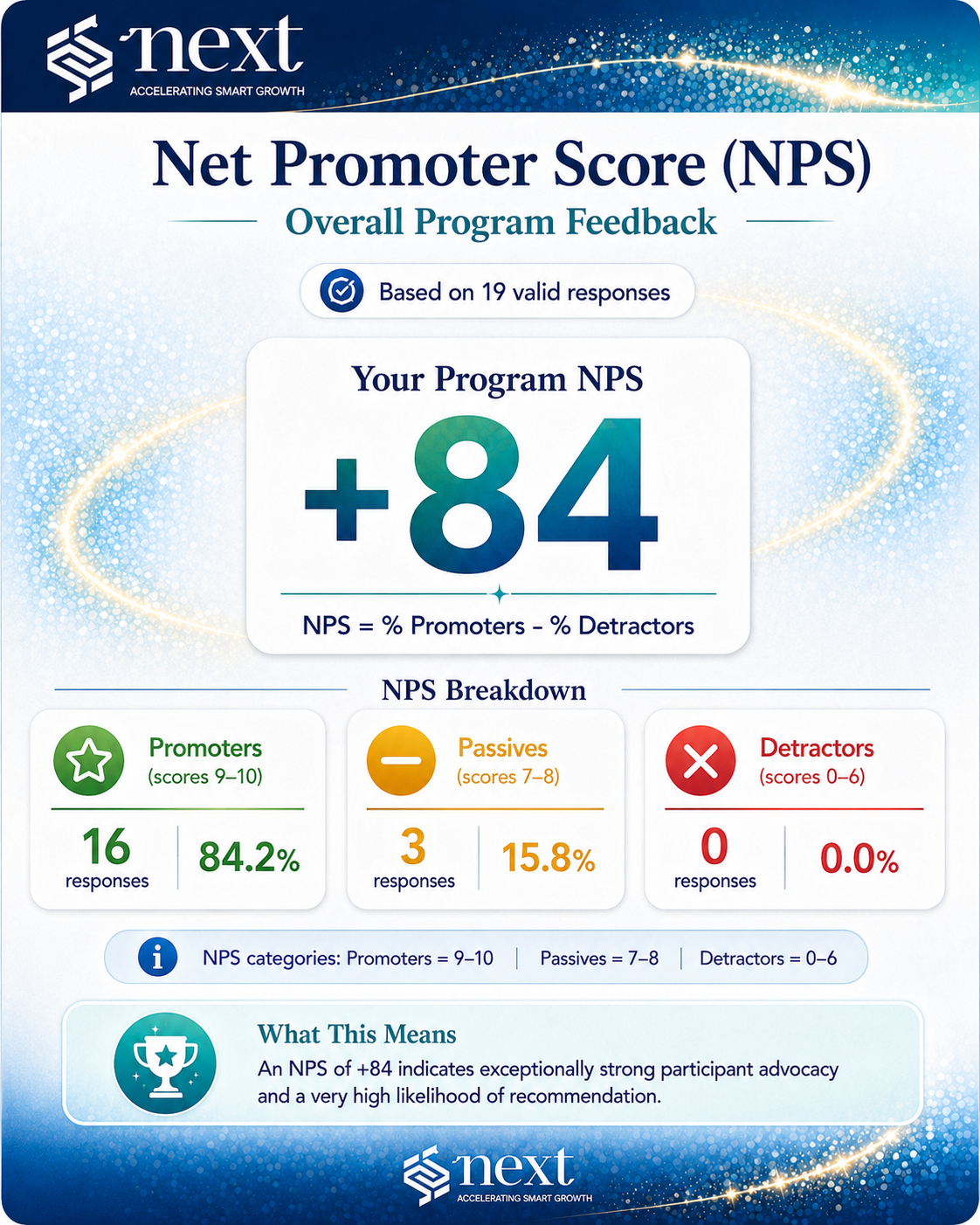
The program generated exceptional advocacy because participants did more than learn about leadership—they practiced it, reflected on it, and experienced it in community.
The strongest path forward is to preserve the program’s human, practical, and reflective character while extending the time available for application, integration, and sustained implementation.